Walk into a well-loved library on a rainy Monday and you can smell the story of the weekend: wet coats, a bake sale, a chess tournament, maybe a toddler’s enthusiastic relationship with glitter. Now imagine all that bustle whisked into the return air grilles and sent on a field trip through the ductwork. That is the hidden biography of your HVAC system. In buildings dedicated to learning, where a sneeze can echo through a semester and quiet is a sacred commodity, clean ducts are not a luxury. They are part of the curriculum.
Why libraries and learning spaces are not just another office
Libraries and educational centers behave differently from typical commercial offices. The occupants range from immunocompromised patrons to teenagers who believe the return grille is the perfect place to park a gum wrapper. Loading changes hour by hour. A quiet morning in Special Collections becomes a crowded afternoon in the children’s room. Classrooms empty for breaks, then flood with warm bodies and CO2. Meeting rooms swing from two people and a laptop to a robotics team wielding hot glue guns. Air systems chase these microclimates, and the ductwork records every change in temperature, humidity, and particulate load.
On top of occupant variety, the buildings themselves host a star cast of dust producers. Paper fibers, toner, chalk residue, book lint, textiles, bits of carpet, and pollen tracked from the quad all join the air dance. Gymnasiums and makerspaces contribute rubber particulates and sawdust. Cafeterias add grease aerosol to their dedicated exhaust runs. Science labs have separate exhaust streams with special controls and fire life-safety components. When people wonder why commercial duct cleaning for libraries and educational centers deserves its own playbook, this is the answer. The mix is complex, precious, and occasionally sticky.
What actually lives in the ducts
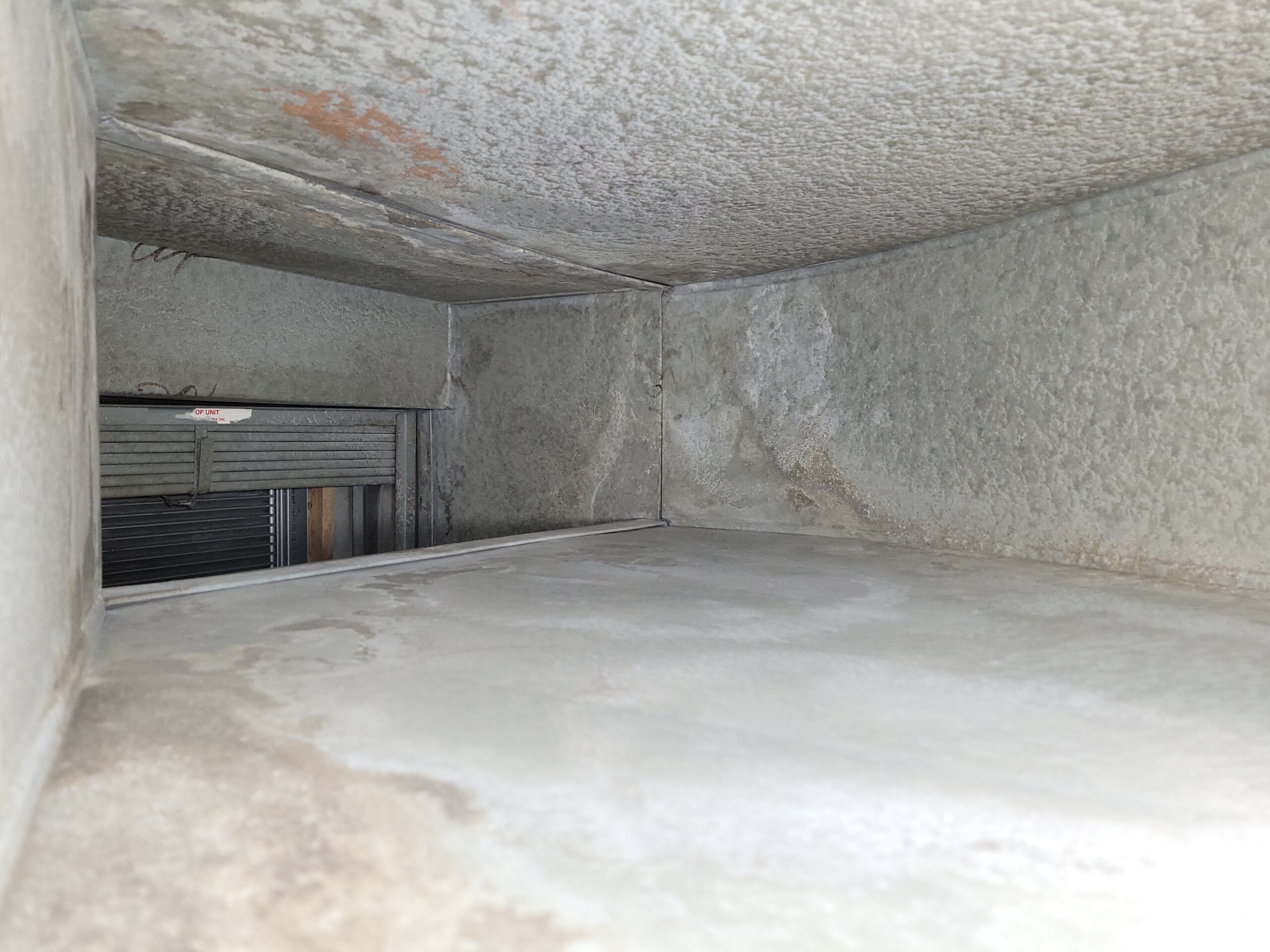
Most ducts in modern buildings do not harbor dramatic horror-movie surprises. What they do accumulate, reliably, is a compact strata of dust on horizontal surfaces, around access doors, in turning vanes, and downstream of coils and dampers. Think of an indoor soil profile: a base of inorganic grit, a fluff of organic fibers, and little pockets of stubborn, greasy film where supply air meets condensation.
In humid regions or buildings with erratic temperature control, the dew point crosses the metal surface enough to spark microbial growth on insulation or the interior lining. That growth is usually superficial and highly location specific. The trouble begins when it intersects with breathing zones or sensitive collections. I once measured a musty odor in a heritage reading room that only appeared during shoulder seasons. The culprit turned out to be a small patch of duct liner downstream of a leaky humidifier connection, hidden above an ornate plaster ceiling. Two years of intermittent wetting had quietly seeded a smell that patrons politely described as “vintage.”
Then there are the souvenirs of modern life: paperclips, staples, stray Lego bricks, and classroom craft debris. None of these will clog a main trunk, but they can rattle in a VAV box, jam a damper, or become unlikely projectiles if a balancing team pushes high airflow during testing. The point is not to fear ducts, but to respect the way their contents can degrade air quality, acoustics, and equipment performance if left alone for a decade.
Air you can hear, air you can feel
Librarians can tell you which registers whisper nicely and which hiss like a tired radiator. Dust and lint build on diffuser vanes, raising velocity noise. Inside the system, deposits around turning vanes, reheat coils, and VAV box inlets increase turbulence and pressure drop. A fan works harder to deliver the same air, which raises energy use and changes the sound profile. Energy managers notice the power bill; patrons notice the shushing battle between staff and a whiny supply grille.

From a health perspective, educational spaces deserve the same rigor as healthcare waiting rooms. Students and staff spend six to eight hours breathing the indoor mix. Chronic exposure to elevated particulates can exacerbate asthma and allergies, and while filters do the heavy lifting, the duct network is part of the filtration story. Dust layers become reservoirs that resuspend under high fan speeds or during seasonal changeovers. If you have ever watched a shaft of sunlight reveal the first fall startup plume in a gym, you know the choreography.
A clean duct system will not solve all indoor air quality problems. It will, however, lower background particulate levels, reduce odor reservoirs, and stabilize pressure profiles so that filtration and ventilation strategies perform as designed. In practical terms, that can mean fewer after-lunch yawns in a lecture hall, quieter stacks, and lower absenteeism during peak allergy season. The benefits are not fairy dust. They are the compounding effect of fewer irritants and a calmer mechanical system.
Energy and the unglamorous math of pressure drop
Duct systems do not need to be pristine to be efficient, but thick deposits are not free. Every millimeter of fuzz on the wrong surface adds friction. In field projects across medium to large education buildings, I have seen total static pressure drop on the supply side fall by 10 to 25 percent after comprehensive cleaning and coil maintenance. That often translates into 5 to 15 percent fan energy reduction when paired with proper commissioning. If the facility runs fans 60 to 80 hours a week, even a modest power reduction shows up as real dollars.
There is also the quiet savings. Dirty ducts increase the temptation to oversize replacement equipment and crank fan speeds to mask delivery issues. Clean the system, verify actual loads, and you can dial speed back to design intent. When a university library completed a phased cleaning and balancing program, we measured a 0.4 inch water gauge reduction in total external static on a 25,000 CFM air handler. The VFD setpoint followed, and the annual energy model was suddenly believable again.
When should you clean, really
The best schedule marries condition-based monitoring with sensible intervals. Rigid calendar rules fit poorly in buildings with wide seasonal swings. Still, some guidance holds up:
- Supply and return trunks that serve high-use spaces like children’s rooms, gyms, or makerspaces usually benefit from inspection every 18 to 24 months and cleaning every 3 to 5 years, depending on what you find. Systems handling archives or special collections should be cleaner than a debate team’s search history. Aim for inspections every year, including particle counts and odor checks, and clean on evidence. After significant construction or renovation within the air path, plan for a post-project cleaning. Even with covers and temporary filters, job dust sneaks into duct chases. If the system has suffered water events, humidifier leaks, or extended shutdowns, inspect immediately. Microbial growth loves a wet nap.
Standards such as NADCA ACR provide criteria for acceptable cleanliness and methods of verification. Pair those with ASHRAE 62.1 ventilation requirements and 55 thermal comfort guidelines to keep the picture complete. What matters is documenting conditions, not guessing by feel.
How professional cleaning actually works
People imagine duct cleaning as a glorified vacuum with a long hose. The real choreography is closer to surgical housekeeping, with negative pressure, tool choice, and containment doing the heavy lifting. Here is a simple, building-operator’s view of a competent process:
- Stabilize and isolate. Lock out the air handler, set up temporary filters to protect coils, and establish negative pressure in the duct section using a HEPA-filtered vacuum collection unit connected through an access opening. Open and access. Install or use code-compliant access panels near coils, dampers, and turns. Photograph pre-clean conditions for the report. Agitate and mobilize. Use rotating brushes, compressed air whips, or hand tools to dislodge debris toward the collection point, working from farthest run back to unit. Protect internal linings to avoid damage. Clean the components. Detail-clean coils, drain pans, reheat coils, VAV interiors, and diffusers. Treat microbial growth per standard, typically with physical removal and targeted disinfectants approved for HVAC use. Verify and close. Perform visual verification to NADCA criteria, measure particle counts as needed, seal access panels, replace filters, and restart with a gentle ramp-up to watch for dislodged remnants.
Yes, that is a list. It is one of the few places where a list beats paragraphs because the sequence matters, and skipping steps turns a maintenance task into a hallway snow globe.
What you should do the week before
Facilities that set the stage save time and keep the peace. A few days before the crew arrives, coordinate with staff and share a clear plan. A little choreography turns disruption into an efficient, almost invisible operation.
- Reserve after-hours windows for noisy work near reading rooms and classrooms. In libraries, the hour before open and the hour after close are golden. Move or cover collections, makerspace equipment, and sensitive electronics near diffusers and returns. Duct crews bring drop cloths, but staff know the vulnerable corners. Share floor plans and mechanical schedules. Label ducts that serve special collections, labs, and the rare book areas so crews use the right protocols. Stage filter replacements and coil access tools. If your procurement cycle drags, pre-order MERV 13 or higher filters sized correctly, plus any gaskets for access panels. Communicate with custodial teams to run a post-cleaning dust pass the next morning. Even well-contained jobs loosen a little residue.
That is your second and final list. We will go back to prose now.
Sensitive zones and their quirks
Not all ducts are created equal. If your building includes a science wing, gym, teaching kitchen, or archives, the cleaning approach should match the risk.
Archives and special collections want very stable temperature and low particulate counts, which means any maintenance near their supply runs requires tight containment and immediate verification. Negative pressure in the duct is not enough if you open access panels in the same room as a 16th century map. Stage equipment in an anteroom, use sticky mats, and keep doors sealed. After cleaning, verify with a handheld particle counter and a quick sniff test. Yes, your nose still matters.
Science labs often have dedicated exhaust with inline fans and specialized dampers. Those ducts may be stainless steel and sealed differently. Cleaning focuses on exhaust terminals, short runs, and hoods. Never send a brush blindly into a lab exhaust that might include baffles or energy recovery components. Coordinate with the lab manager about chemical residues and lockout protocols.
Gyms and multipurpose halls generate dust by the pound. Floor refinishing creates fine particulates that love to camp in high supply trunks. Schedule a cleaning after refinishing projects and pair it with diffuser cleaning to keep velocity noise from rising. While you are there, check that the acoustic panels are not doubling as dust filters.
Kitchens have separate grease ducts governed by fire codes. Those are cleaned under different standards and with far more frequent intervals, but pay attention to adjacent general return air paths. Grease aerosol migrates like gossip.
Filtration, the unglamorous hero
You can clean ducts religiously and still lose if the filters are underspecified or poorly seated. In most educational buildings, MERV 13 has become the practical baseline for central systems, with MERV 14 or 15 on systems serving high-risk populations or spaces where filtration is the primary mitigation. Upgrading filters without checking fan capacity is a classic own-goal. A higher MERV rating raises pressure drop, and if your fan already lives on the steep part of its curve, efficiency will suffer.
Seat filters properly. A one-inch gap around a filter bank turns MERV 13 into MERV who-knows. I have seen immaculate coil fins crusted along the edges because air took the path of least resistance. A tube of gasket material and an afternoon with a patient tech often beats a wildly expensive coil cleaning down the road.
Consider pre-filters where fibrous dust loads are high. In libraries with aging carpet and heavy paper movement, a MERV 8 pre-filter before a MERV 13 final filter can stretch change intervals and keep fine filters from clogging prematurely. Track differential pressure across the bank, not just calendar days, and let data, not habit, decide when to change.
Proof that it worked
The worst duct cleaning is the kind that nobody can prove happened. Quality vendors document with before and after photos, static pressure measurements, manometer readings across coils, and where relevant, particle counts in occupied zones. Keep it simple but credible. If the system serves 20,000 square feet, ask for representative sections of duct photographs, coil fins up close, and a summary table of pressure drop changes.
Two practical metrics I like in libraries and schools:
- Total external static pressure at design CFM, before and after. A drop of even 0.2 inches water gauge on a medium-size air handler is significant. VAV box minimum and maximum CFM accuracy per the control system trend logs. After cleaning and balancing, boxes stop hunting, and room complaints fall.
Noise is qualitative but powerful. Ask staff to note which diffusers hissed before. After cleaning and diffuser detailing, most of those whispers turn back into a background murmur.
Costs, planning, and the honest budget
Pricing varies with region, access, and how many access doors need to be installed. Across a portfolio of university and municipal library projects, reasonable ballpark figures look like this:
- Broad-coverage duct cleaning on standard supply and return trunks often lands between 0.20 and 0.60 dollars per square foot of served area when bid as part of a phased program. In dense urban areas or complex historic buildings, the range stretches higher. Per component pricing also shows up. VAV box interiors might run 150 to 300 dollars each depending on size and condition. Coil cleaning for medium air handlers ranges from 500 to 2,000 dollars, driven by fin depth and access. Access panel installation runs roughly 75 to 250 dollars per panel installed, materials included, depending on duct size and finish.
Bundle work smartly. If you are opening access to clean, schedule control contractors to recalibrate sensors while panels are open. Have the balancing team follow the cleaners by a day. A two-week, tightly staged window can accomplish what six months of ad hoc calls never will.
Do not forget the soft costs. After-hours work avoids disrupting patrons and classes, but it commands a premium. On the other hand, the value of a quiet reading room at 10 a.m. On a Thursday is not theoretical. Budget for some night work and treat it like hospitality, not punishment.
Vendor selection without the buzzwords
Look for membership in professional bodies like NADCA and technicians with verifiable training. Ask for sample reports from similar buildings, not just glossy one-pagers. Reference checks should include at least one educational client and one library. The best vendors do not flinch when you ask about chain of custody for photographs, containment practices near collections, or how they protect duct liner during agitation.
Scope carefully. Spell out which systems are in and out, how many access panels are permitted, what microbial treatment methods are acceptable, and what constitutes visual verification. Require replacement of filters with agreed MERV ratings and proper sealing. Make reporting requirements boring, detailed, and non-negotiable. The art lives in the field; the contract should be a checklist with no poetry.
A tale from the stacks
A mid-century civic library I worked with had a chronic mustiness in the mezzanine and frequent shushing directed at a surprisingly chatty supply diffuser above periodicals. Patrons joked that the building sighed when someone took out a biography. The facility team had invested in good filters and new carpet, but the smell lingered every spring and fall.
We opened the supply trunk and found a familiar cocktail: lint mats downstream of a decades-old humidifier connection and a line of fine dust tracing every turning vane. The reheat coils were a felt blanket. After cleaning, we tuned the VAV setpoints and replaced a few warped Visit this link diffusers that had been hand-bent over the years. Static pressure fell by about 0.3 inches water gauge at the design flow. Energy use dropped approximately 8 percent over the next quarter, normalized for degree days. The smell? Gone, except for the good kind that clings to used bookstores. The head librarian sent a note that simply read, “The building is no longer narrating. Thank you.”
Common mistakes worth skipping
Do not clean ducts and ignore coils. Most of the gain in airflow and odor control lives at the coils and drain pans. If your coils are matted, duct cleaning alone will disappoint.
Do not upgrade to high-MERV filters without testing fan capacity and sealing the banks. It is like putting racing tires on a shopping cart with wobbly wheels.
Do not forget the returns. Returns are the housekeepers of the system, and they collect the best and worst of occupant life. A shiny supply means little if the returns wheeze.
Do not treat microbial growth with a spray-and-pray disinfectant. Physical removal and moisture control beat a fragrant bandage.
Do not ignore the balancing step. Once the system is clean, air wants to explore. A day of TAB work converts newfound cleanliness into consistent comfort.
Keeping it clean between deep work
Duct cleaning is a project; cleanliness is a habit. The weekly heroes are filters changed on pressure differential, drain pans that stay dry, humidifiers that drip nowhere but where they should, and return grilles that get a real wipe, not a love tap with a feather duster. Trend your fans, watch for creeping static pressure, and listen to your building. When the diffusers go from hush to hiss, or the reading room gets sleepy at 2 p.m., the system is whispering that it needs attention.
In schools and libraries, the dividends of routine attention are human, not abstract. A child with asthma who can focus through story time, a grad student who can think in silence without the white noise of a surging fan, a staff member who finishes a shift without a headache, a utility bill that stops creeping upward every season. Commercial duct cleaning is one piece of that puzzle, not a cure-all, but when done thoughtfully, it is a quiet, powerful ally of learning.
The short case for taking this seriously
Ducts are not glamorous. Nobody throws a gala for a freshly cleaned return trunk. But these hidden corridors escort every breath, every whisper, and every idea from room to room. When you keep them clean, you free your filters to filter, your fans to purr, your thermostats to govern gently, and your building to be the quiet partner education deserves. The work is equal parts craft and patience. The results do not sparkle; they settle, like dust that finally has nowhere to cling. And on a rainy Monday, that is exactly what you want.